
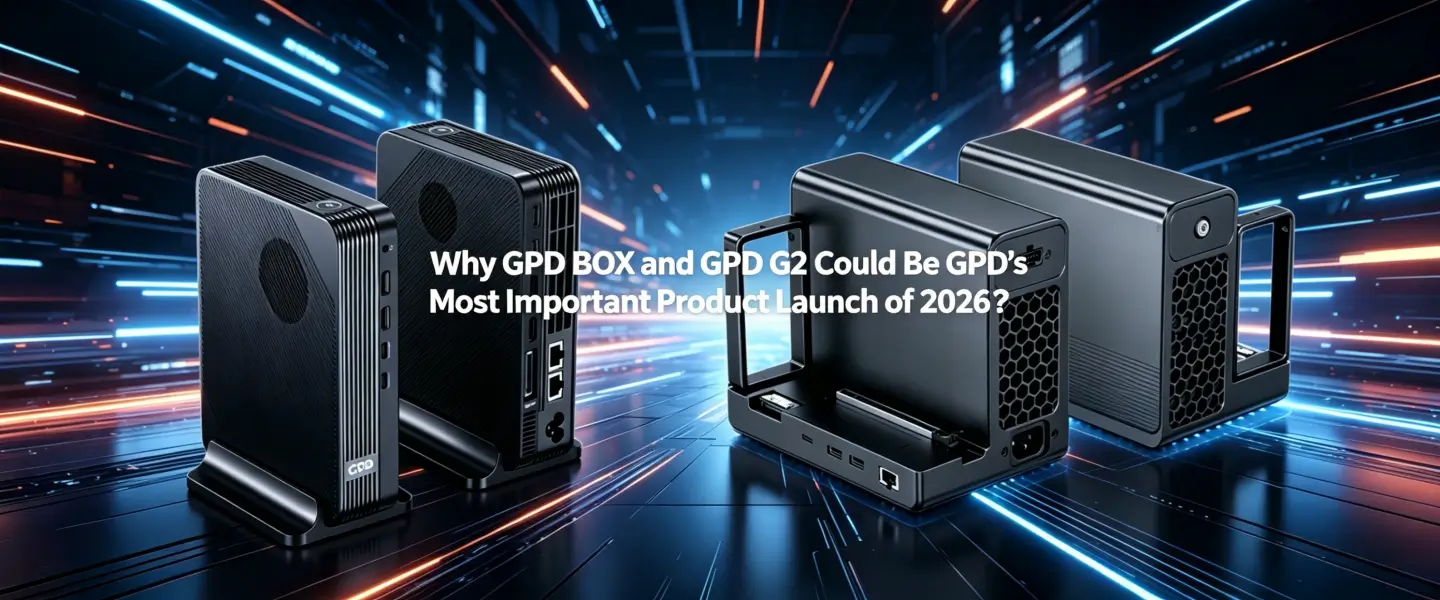
1. GPD’s 2026 Announcements Signal a Much Bigger Shift
For years, GPD has been known for handheld gaming PCs, ultra-portable laptops, and niche mobile productivity devices. From the WIN series to the Pocket lineup, the company has consistently focused on making small machines do surprisingly big things.
But the newly revealed GPD BOX and GPD G2 suggest that GPD is no longer thinking only about handheld portability.
This time, GPD is entering a very different category: modular desktop-class computing.
Rather than releasing another isolated device, GPD is introducing two products designed to work as a unified high-performance system—a compact mini PC on one side, and a next-generation external GPU expansion dock on the other.
That distinction matters.
Because this launch is not simply about adding two more products to the catalog. It reflects GPD’s intention to move from being a handheld manufacturer into a broader compact computing ecosystem brand.
2. GPD BOX Is More Than GPD’s First Mini PC
At first glance, the GPD BOX may look like GPD’s entry into the crowded mini PC market.
In reality, it is positioned much higher than a conventional small office desktop.
Built around Intel’s latest Panther Lake architecture, the GPD BOX introduces a level of expandability that traditional mini PCs rarely offer. GPD has confirmed support for MCIO 8i, PCIe 5.0 ×8 bandwidth, dual USB4 v2.0 ports, dual M.2 SSD slots, dual 2.5G LAN, and advanced AI-ready computing capability.
This means the GPD BOX is not designed merely for web browsing or office tasks.
Its hardware direction clearly targets:
- high-end gaming setups
- AI local inference workloads
- creative production stations
- multi-display desktop environments
- enterprise-grade storage expansion
The most eye-catching part is its size-to-performance ratio.
GPD is packaging desktop-level connectivity, advanced cooling, and workstation-class expansion into a machine that still remains dramatically smaller than a traditional tower PC. For users tired of bulky desktop setups but unwilling to compromise on capability, this is exactly the type of category many have been waiting for.
3. GPD G2 Changes the Role of an eGPU Dock Entirely
External GPU docks are not new—but most of them have historically been limited by one problem: bandwidth.
That limitation is exactly what GPD is trying to attack with the new GPD G2.
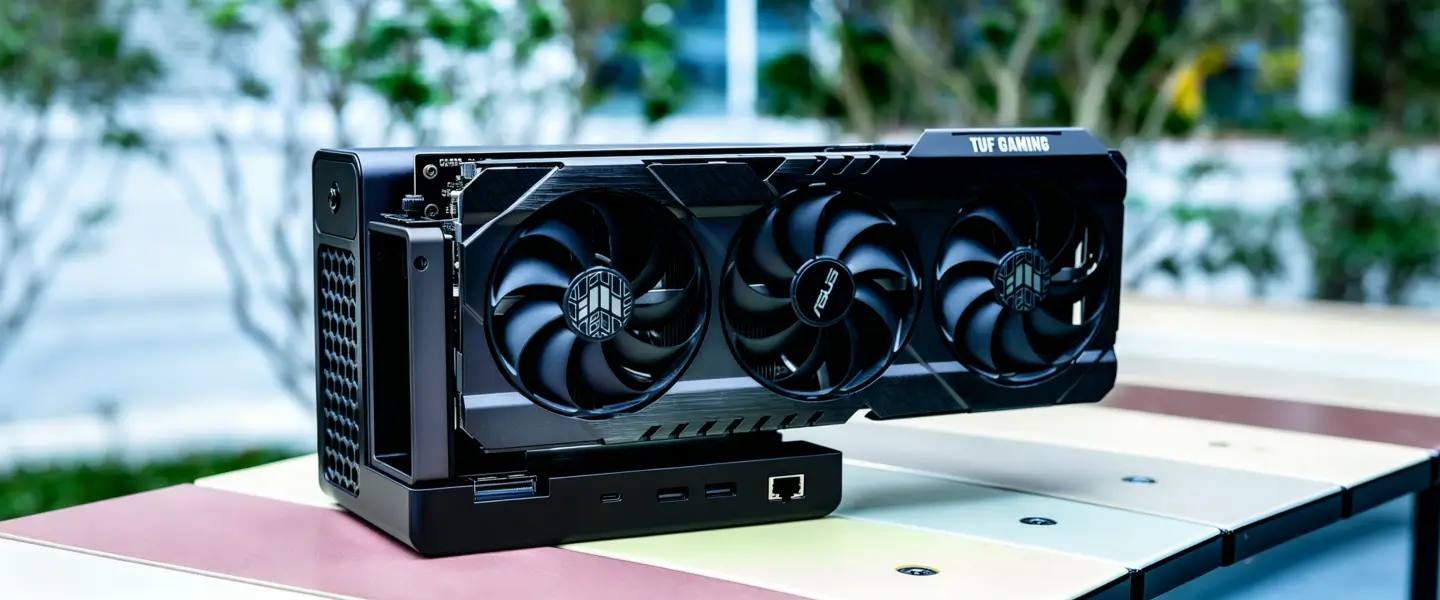
Instead of treating external graphics as a secondary accessory, GPD has built the G2 around a much more ambitious role: a full desktop expansion hub designed specifically for high-throughput GPU communication.
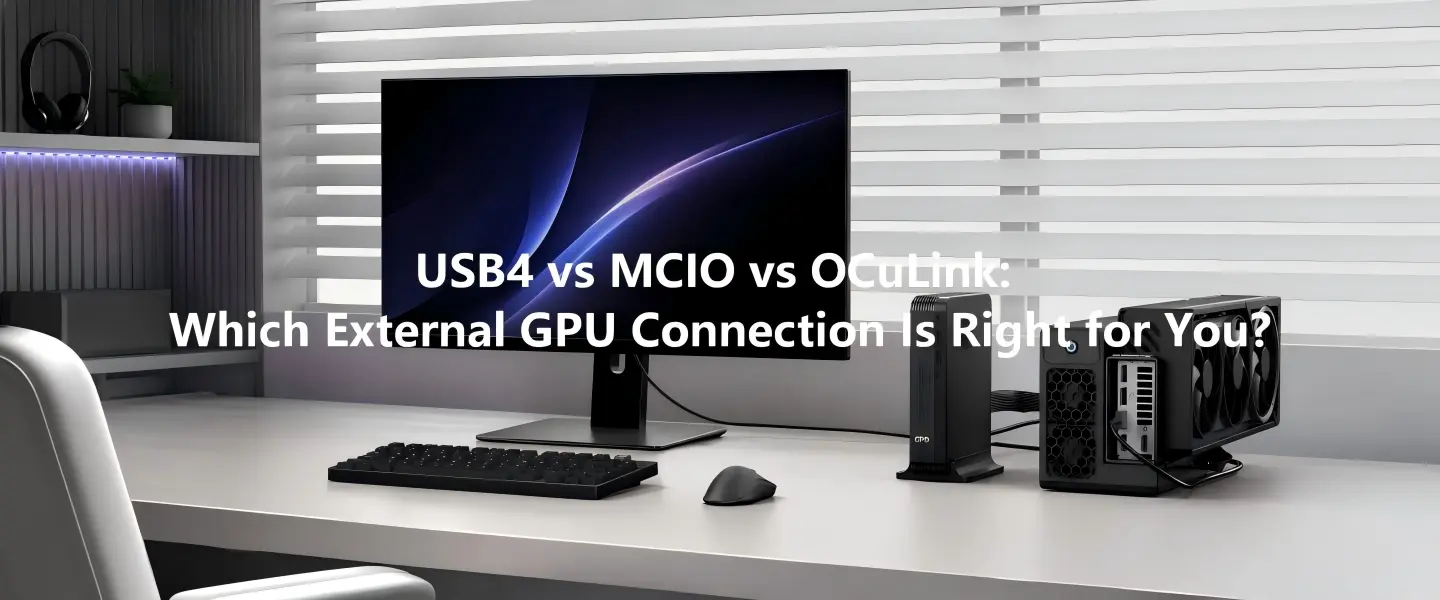
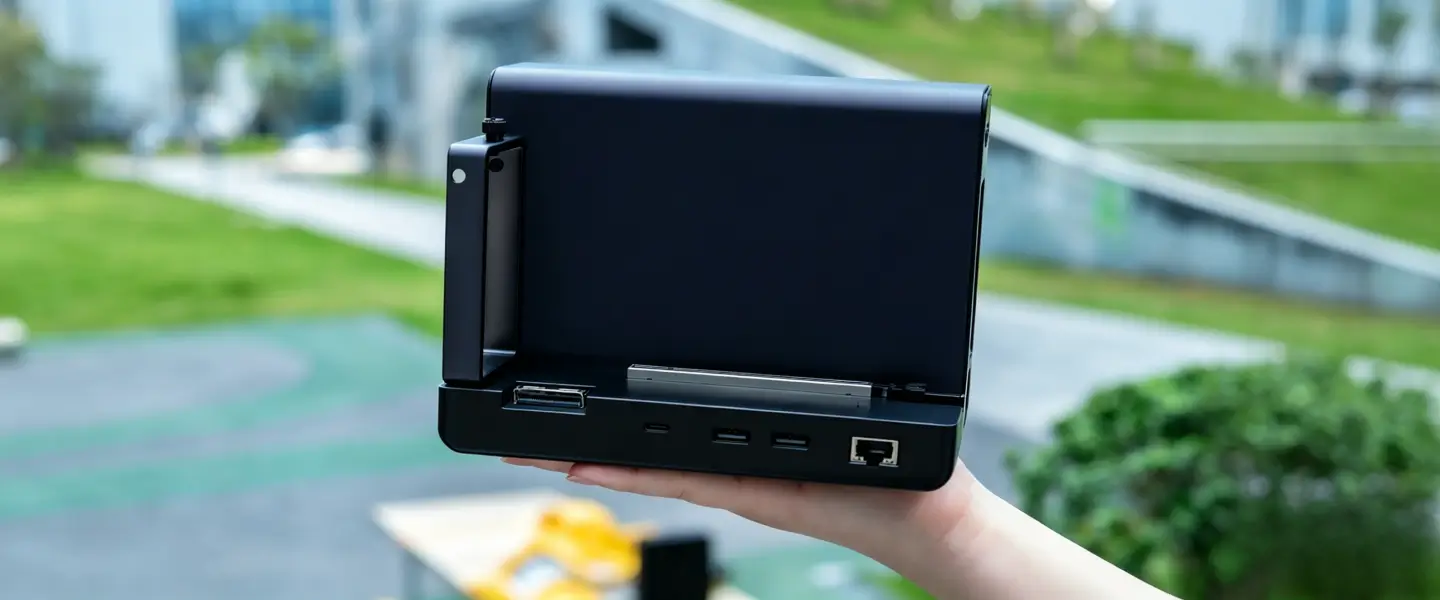
With MCIO connectivity plus USB4 v2.0 support, onboard M.2 storage capability, and integrated 100W PD charging, the GPD G2 is being presented less like a simple eGPU shell and more like the performance backbone of an expandable compact workstation.
GPD’s own claim that an RTX 4090 sees only around a 2% performance drop when connected through this architecture is especially attention-grabbing. While independent testing will ultimately decide the real-world result, the message is clear—GPD wants users to think of this as a near-desktop graphics solution, not a compromised laptop accessory.
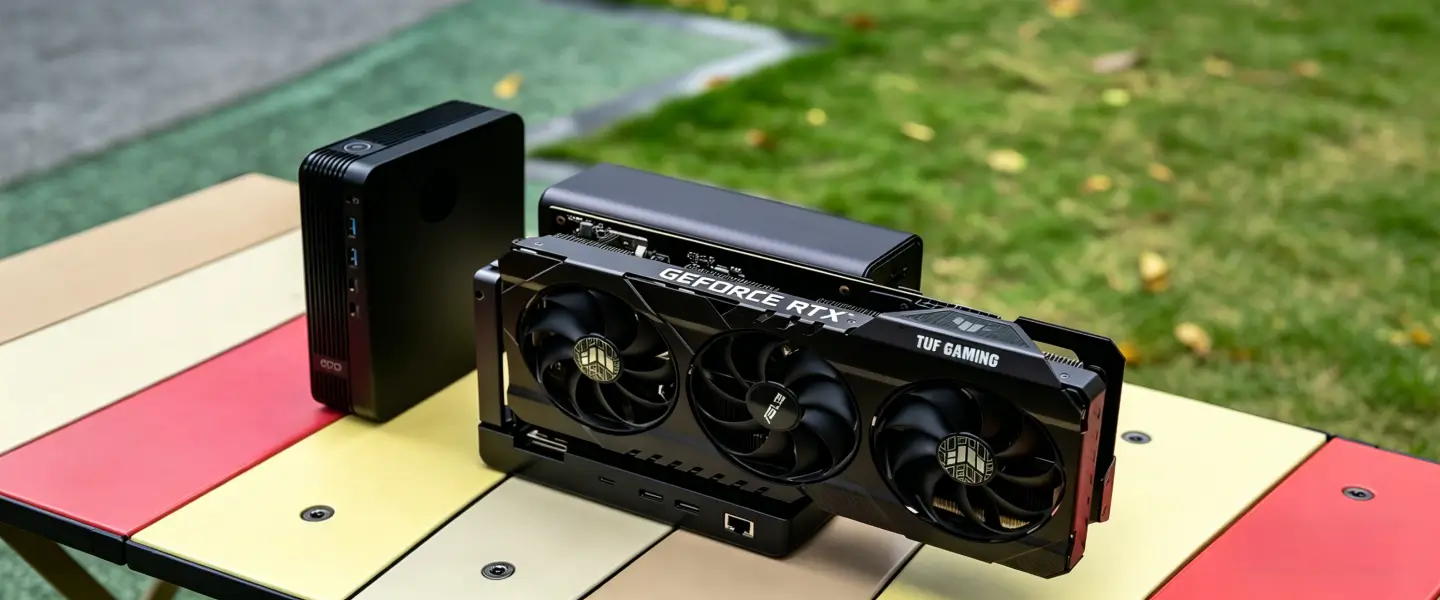
And when paired with the GPD BOX, that idea becomes even more compelling:
small machine when you need portability,
full GPU monster when you need power.
That kind of transition has always been the dream behind compact computing, but very few brands have tried to build the hardware around it this aggressively.
4. GPD BOX + GPD G2 Show That GPD Is Building an Entire Performance Ecosystem
The biggest takeaway from this announcement is not the GPD BOX alone, and not the GPD G2 alone.
It is the ecosystem concept behind them.
GPD is effectively saying that future compact computing should no longer force users to choose between:
small size
or serious performance.
Instead, users should be able to start with a tiny desktop footprint and scale upward only when additional graphics, storage, AI power, or workstation bandwidth are needed.
That philosophy makes these two products much more significant than ordinary annual hardware updates.
This is GPD’s first visible move toward an interconnected modular hardware platform—one where mini PCs, external graphics docks, and future compact computing products can all share the same performance language.
For longtime GPD followers, that makes the 2026 launch especially important.
Because GPD BOX and GPD G2 do not feel like standalone experiments.
They feel like the beginning of GPD’s next generation.
5. FAQ
What exactly is the GPD BOX?
The GPD BOX is GPD’s first officially announced mini PC for 2026. Unlike a standard office mini desktop, it is designed as a compact high-performance computer built around Intel Panther Lake architecture, advanced AI computing capability, PCIe 5.0 expansion, and premium connectivity for gaming, productivity, and professional workloads.
What makes the GPD G2 different from a normal eGPU dock?
The GPD G2 is not just a regular external graphics enclosure. GPD is introducing it as a next-generation dual-interface GPU dock with MCIO and USB4 v2.0 support, which gives it much higher bandwidth potential than many traditional eGPU solutions. It also integrates additional storage expansion and power delivery, making it more of a desktop performance hub than a simple accessory.
Do the GPD BOX and GPD G2 need to be used together?
Not necessarily.
The GPD BOX and GPD G2 are not products that depend entirely on each other—both can operate perfectly well as standalone devices.
The GPD BOX is a fully capable high-performance mini PC on its own, designed for compact gaming, office productivity, AI computing, and advanced desktop workflows. Likewise, the GPD G2 can also function independently as a next-generation external GPU dock for other compatible devices through its high-bandwidth interfaces.
Is the GPD BOX only for gaming users?
No. Although gaming performance is one of the main highlights, the GPD BOX is also aimed at users who need AI local computing, workstation productivity, multi-monitor office setups, media editing, and high-speed storage expansion.
Its hardware layout suggests that GPD is targeting both gamers and professional users who want strong performance without using a full-size desktop tower.
Has GPD confirmed the final release date and price yet?
At the moment, GPD has only officially revealed the products and some of their key hardware highlights. Full retail pricing, exact launch dates, and all final configuration options have not been completely announced yet.
More detailed information is expected as GPD moves closer to the official release window.