
The GPD WIN Max 2 2025 is already a capable compact handheld laptop, combining a clamshell body, physical keyboard, built-in gaming controls, AMD Ryzen processor options, and practical expansion ports.
The new GPD WIN Max 3 takes the series in a more performance-focused and modular direction. Instead of being only a small refresh, it brings changes to the display, processor platform, graphics, memory ceiling, battery design, cooling support, and storage expansion.
This article focuses on the key upgrades from the GPD WIN Max 2 2025 to the WIN Max 3, based on currently available product information.
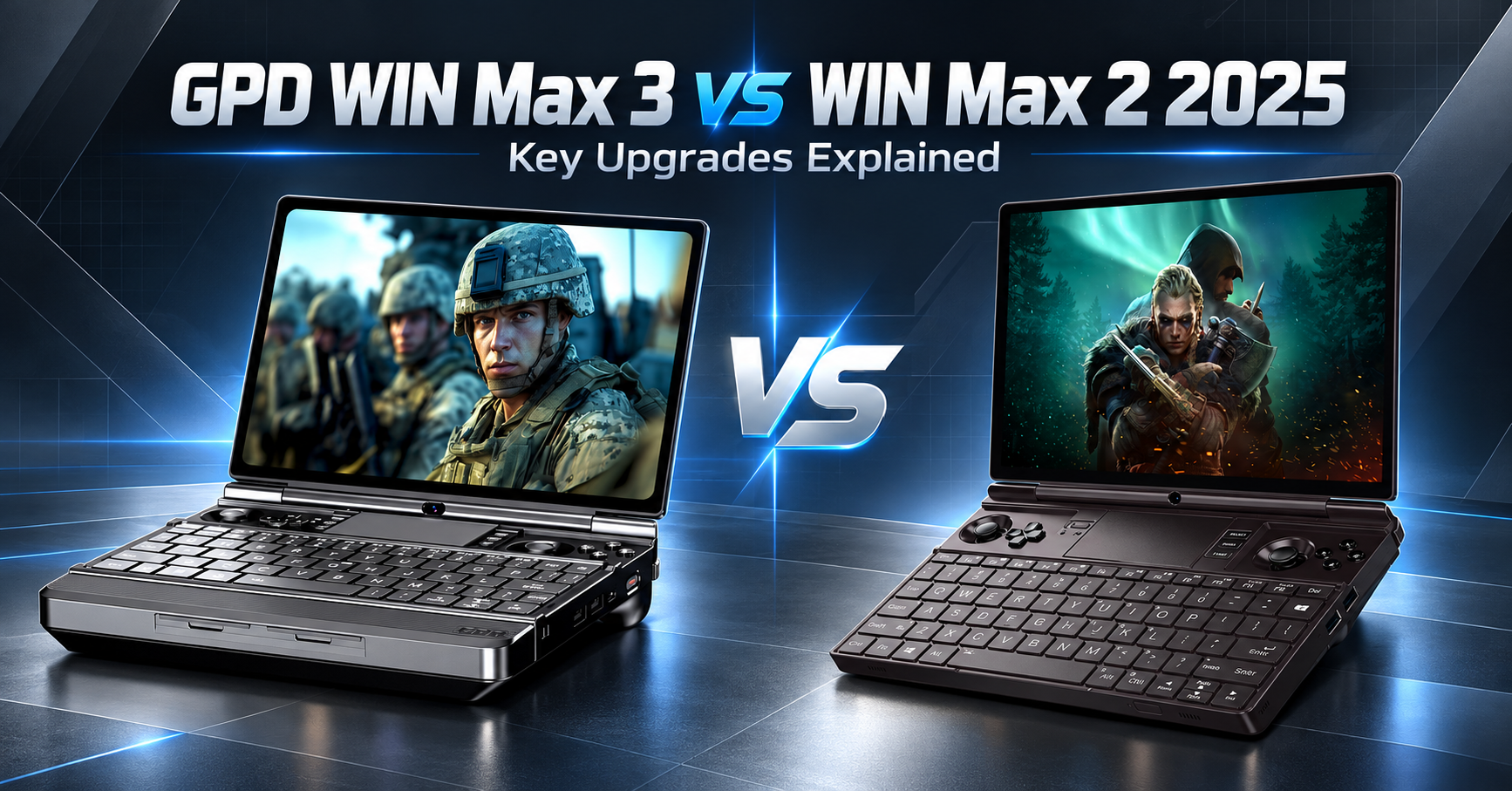
Quick Comparison: GPD WIN Max 3 vs GPD WIN Max 2 2025
| Area | GPD WIN Max 2 2025 | GPD WIN Max 3 |
|---|---|---|
| Display | 10.1-inch IPS, 2560 × 1600, 60Hz | 9.06-inch AMOLED, 2400 × 1504, up to 165Hz |
| Processor | Ryzen 7 8840U / Ryzen AI 9 HX 370 | Ryzen AI Max+ 388 / Ryzen AI Max+ 395 |
| Graphics | Radeon 780M / Radeon 890M | Radeon 8060S |
| Memory | 32GB / 64GB LPDDR5x 7500 MT/s | 32GB / 64GB / up to 128GB LPDDR5x 8000 MT/s |
| Battery | Built-in 67Wh battery | Removable 97Wh magnetic battery module |
| Cooling | Built-in cooling design | Built-in cooling + optional external cooling module |
| Storage | M.2 2280 + M.2 2230 + SD / microSD expansion | M.2 2280 + M.2 2230 + microSD Express |
Display Upgrade: From IPS to AMOLED
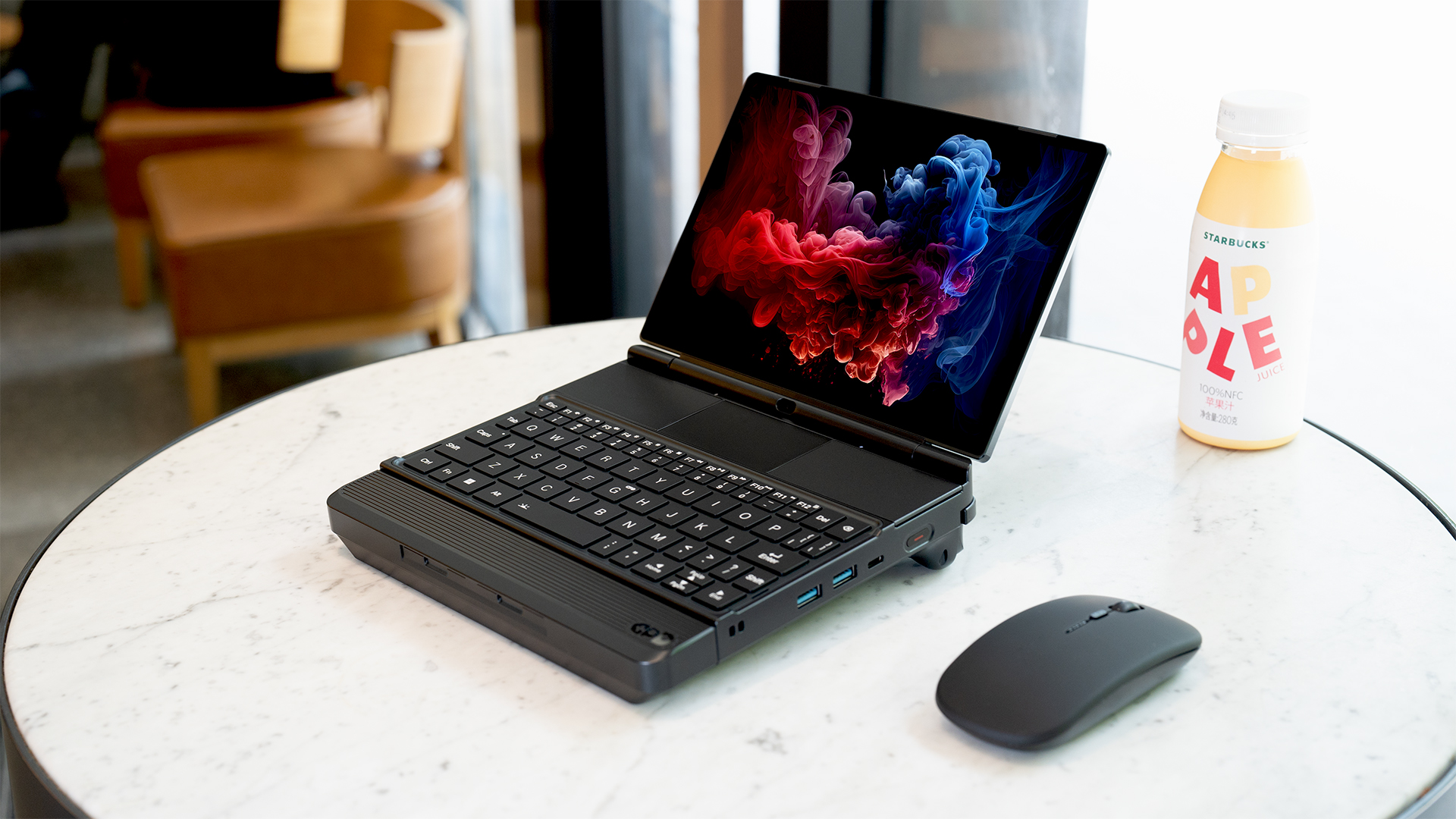
The GPD WIN Max 2 2025 uses a 10.1-inch IPS display with a 2560 × 1600 resolution and 60Hz refresh rate. Its larger screen gives users a comfortable workspace for browsing, documents, emulation, and productivity tasks.
The GPD WIN Max 3 moves to a 9.06-inch AMOLED display with a 2400 × 1504 resolution and up to 165Hz refresh rate. Although the screen is smaller, the upgrade to AMOLED and a much higher refresh rate gives the WIN Max 3 a different visual advantage.
For gaming, the higher refresh rate can make motion feel smoother. For everyday use, AMOLED contrast can help text, videos, icons, and dark scenes look richer and more vivid. The WIN Max 2 2025 offers a larger display, while the WIN Max 3 focuses more on contrast, smoothness, and display quality.
Processor and Graphics Upgrade
The GPD WIN Max 2 2025 offers AMD Ryzen 7 8840U and Ryzen AI 9 HX 370 processor options, depending on configuration. These are already strong choices for portable gaming, productivity, media, and general Windows use.
The WIN Max 3 moves to AMD Ryzen AI Max+ options, including Ryzen AI Max+ 388 and Ryzen AI Max+ 395. On paper, this gives the WIN Max 3 a higher-class processor platform for more demanding handheld PC use, heavier multitasking, and performance-focused workflows.
Graphics also move to a higher class. The WIN Max 2 2025 uses Radeon 780M or Radeon 890M integrated graphics, while the WIN Max 3 steps up to Radeon 8060S integrated graphics. The Radeon 8060S is still integrated graphics, not a discrete GPU, but it gives the WIN Max 3 more graphics headroom on paper. Final real-world performance will still depend on retail hardware, power settings, cooling conditions, and software optimization.
Memory Upgrade: Up to 128GB
The GPD WIN Max 2 2025 offers 32GB or 64GB LPDDR5x memory at 7500 MT/s. For many users, that is already enough for gaming, browsing, and daily productivity.
The GPD WIN Max 3 raises the memory ceiling to up to 128GB LPDDR5x 8000 MT/s, depending on configuration. This does not mean every WIN Max 3 model includes 128GB memory. The listed options include 32GB, 64GB, and 128GB, with 128GB positioned as the highest-end choice.
The real upgrade is the higher memory ceiling. For gaming alone, 128GB may not be necessary for most users. But for creators, developers, heavy multitaskers, virtual machine users, and users interested in local AI workflows, the higher memory option may be a meaningful advantage.
Battery, Cooling and Storage Upgrades
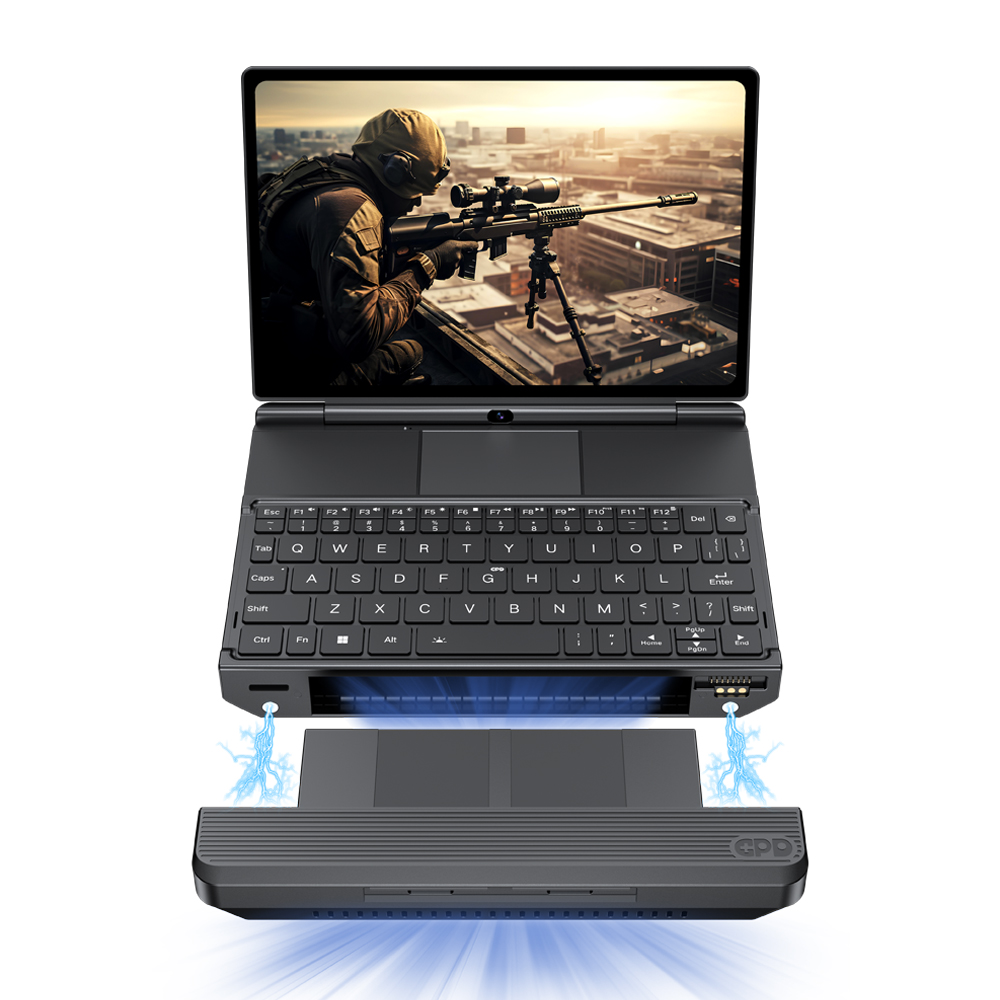
The WIN Max 2 2025 uses a built-in 67Wh battery, while the WIN Max 3 changes to a removable 97Wh magnetic battery module. Users can attach the module for longer unplugged sessions or remove it when they want a lighter setup. The trade-off is that the device becomes larger and heavier when the battery module is attached.
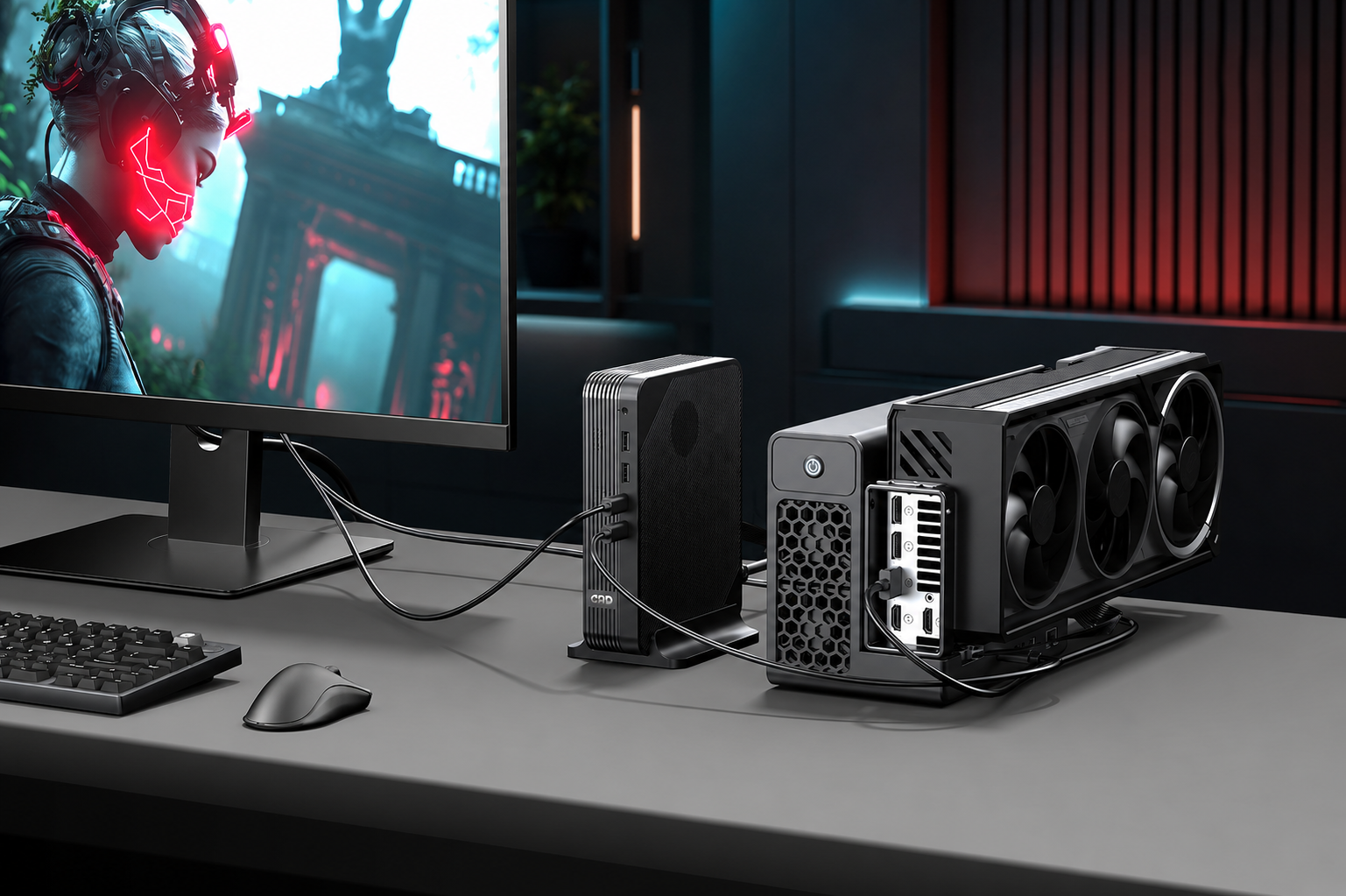
Cooling also becomes more modular. The WIN Max 2 2025 uses a built-in cooling design, while the WIN Max 3 supports built-in cooling plus an optional external cooling module. According to available product information, the external cooling module is designed to provide additional thermal headroom, though sustained performance will depend on configuration, cooling conditions, power mode, and final hardware behavior.
Storage expansion is also updated. The WIN Max 2 2025 supports M.2 2280, M.2 2230, SD card, and microSD card expansion depending on configuration and layout. The WIN Max 3 keeps M.2 2280 and M.2 2230 SSD support, while adding microSD Express expansion for users with large game libraries, media files, or work projects.
Final Thoughts
The GPD WIN Max 2 2025 is still a capable compact handheld laptop, especially for users who prefer its larger 10.1-inch screen, built-in battery design, and mature hardware platform.
The GPD WIN Max 3 appears to be a broader upgrade. It brings a 165Hz AMOLED display, Ryzen AI Max+ processor options, Radeon 8060S integrated graphics, up to 128GB LPDDR5x memory on select configurations, a removable 97Wh magnetic battery module, optional external cooling support, and updated storage expansion.
Final performance, battery life, thermals, fan noise, and overall value will still depend on retail hardware, pricing, and independent testing. On paper, the WIN Max 3 brings several meaningful upgrades over the WIN Max 2 2025.