
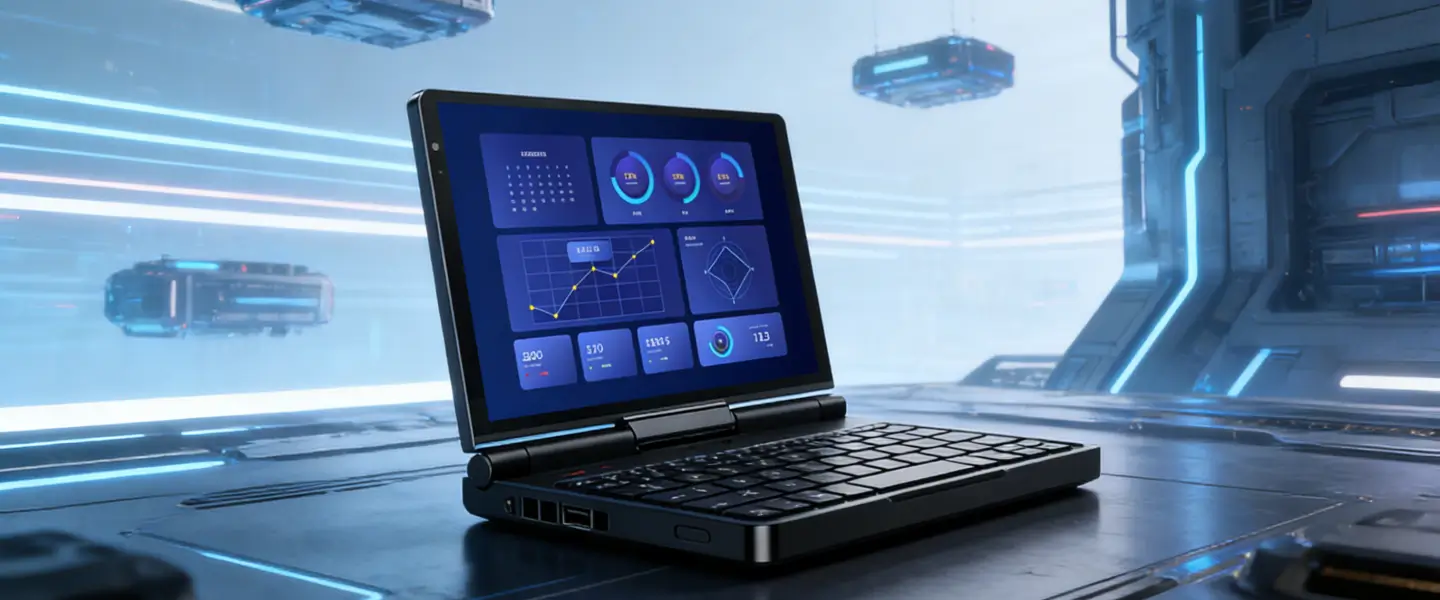

1. Introduction — The Evolution of the GPD Pocket Series
The GPD Pocket lineup has steadily evolved from compact productivity tools into powerful ultra-mobile PCs capable of handling real work on the go.
Devices like the GPD Pocket 3 (2025) introduced modular flexibility and reliability, making them especially popular among IT professionals and business users. The newer GPD Pocket 4 builds on that foundation with significantly upgraded hardware, including the AMD Ryzen™ AI 9 HX 370 and Radeon™ 890M graphics.
This progression raises a natural question across the community:
What direction will the next generation of the GPD Pocket series take?
2. Where We Are Today — GPD Pocket 4 Is Already a Major Leap
Before looking ahead, it’s important to recognize how big the leap from GPD Pocket 3 to GPD Pocket 4 really is.
Compared to earlier models, the GPD Pocket 4 already delivers:
- Desktop-level performance in a handheld-sized device
- Smooth multitasking for productivity, development, and light creative workloads
- Modern AI-capable hardware for future-ready applications
- Significantly improved graphics performance
For most users today, GPD Pocket 4 is more than powerful enough to replace a traditional laptop for everyday work.

3. Community Discussions — Looking Ahead, Not Replacing Today
Recent discussions on platforms like Reddit show growing interest in what comes next for the Pocket series.
Some users speculate about:
- Higher RAM configurations (up to 64GB or more)
- Even stronger sustained performance
- Further narrowing the gap with full-size laptops
However, an important takeaway is this:
👉 These expectations reflect long-term evolution, not immediate necessity.
For current workloads—including coding, remote work, media editing, and multitasking—the GPD Pocket 4 already meets or exceeds user needs.
4. Possible Future Direction of the Pocket Series
Based on current trends and past upgrades, the next generation of the GPD Pocket series could focus on:
- Performance Enhancements
- Next-generation AMD AI processors
- Further GPU improvements
- Higher memory ceilings (potentially beyond 64GB)
- Thermal & Efficiency Improvements
- Better sustained performance under load
- More efficient cooling solutions
- Design Refinements
- Continued lightweight and portable design
- Improved keyboard usability
- Potential continuation of modular expansion features
That said, these are incremental evolutions of an already mature product line, not urgent upgrades for most users.
5. Release Timing — Not Anytime Soon
Looking at GPD’s release pattern:
- GPD Pocket 3 focused on modular productivity
- GPD Pocket 4 delivered a major hardware leap
- GPD WIN 5 shows focus on high-performance devices
Based on this cycle, it’s reasonable to expect that:
👉 The next-generation Pocket device is likely still a long way off (possibly late 2026 or beyond).
This makes waiting impractical for users who need a capable device now.

6. Bigger Trend — Pocket Series as a Laptop Replacement
Across generations, the positioning of the Pocket series has shifted:
- GPD Pocket 3: Secondary productivity device
- GPD Pocket 4: Primary portable workstation
- Future models: Further refinement of this concept
The key trend is clear:
👉 Ultra-mobile PCs are no longer “backup devices”—they are becoming full laptop replacements
And right now, GPD Pocket 4 is already leading that transition.
7. Conclusion — The Smart Choice Right Now
While it’s exciting to think about the future of the GPD Pocket series, the reality is:
The next generation is still far away
Improvements will likely be incremental, not revolutionary
Current hardware already meets most real-world needs
👉 GPD Pocket 4 represents the best balance of performance, portability, and availability today
For users who need a powerful, ultra-portable PC right now,
waiting doesn’t offer real advantages—but using Pocket 4 does.